
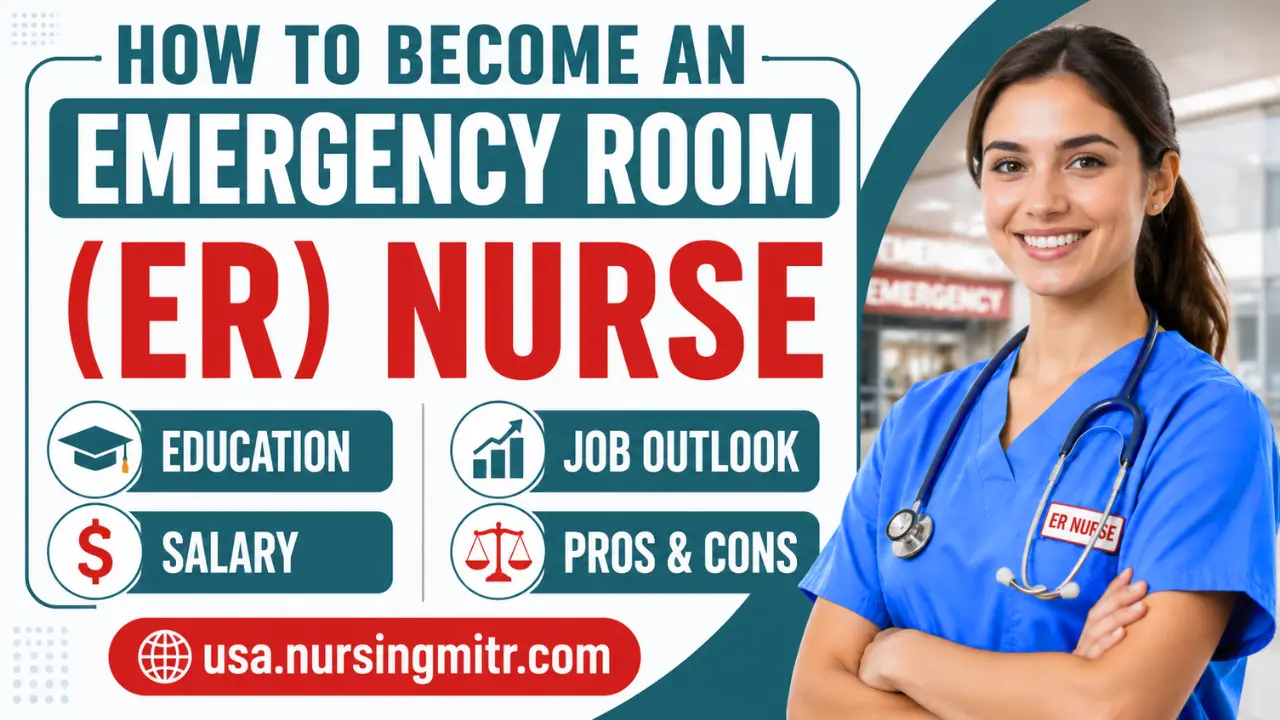
How to Become an ER Nurse: Emergency Room (ER) Nurses, also known as Emergency Department (ED) Nurses, represent the critical intersection of acute medical science, rapid psychological assessment, and high-stakes decision-making. They are the ultimate generalists in a highly specialized world. When a patient crosses the threshold of the emergency department—whether arriving by ambulance with lights flashing or walking through the doors with a sudden symptom—the ER nurse is the first clinical face they see.
To say that ER nursing is “fast-paced” is an understatement; it is an environment characterized by organized chaos. U.S. emergency departments handle approximately 140 million visits annually. Behind those 140 million doors are individuals experiencing the worst moments of their lives: the parents of a child with a 105-degree fever, a teenager who has been in a severe motor vehicle collision (MVC), an elderly person experiencing a silent myocardial infarction (heart attack), or a patient experiencing a severe mental health crisis. The ER nurse must be equally prepared for all of them.
Unlike floor nursing, where a nurse might have a predictable ratio of 4 to 5 patients with known, relatively stable diagnoses, the ER nurse must practice “horizontal nursing.” This means they are often responsible for a zone or a section of the ER, managing 4 to 6 patients simultaneously, but these patients are in varying stages of undifferentiated crisis. One might be crashing, another might be waiting for a CT scan, and another might be demanding discharge paperwork. The cognitive load is immense.
This guide serves as a complete, exhaustive curriculum for understanding, entering, and thriving in the specialty of emergency nursing. We will explore the anatomy of an ER nurse’s role, the exact pathway to licensure and certification, the financial realities of the career, the subspecialties available, and the profound psychological tolls and triumphs of the job.
Part I: The Anatomy of Emergency Nursing
What Exactly Is an Emergency Room Nurse?
At its core, an Emergency Room Nurse is a Registered Nurse (RN) who has honed their assessment skills to a razor-sharp edge, allowing them to identify life-threatening conditions from minimal data. The Emergency Nurses Association (ENA) defines emergency nursing as the care of individuals from across the lifespan with actual or perceived emergent conditions.
ER nurses are distinct from other specialties in several key ways:
- Undifferentiated Patients: A med-surg nurse receives a patient with a known diagnosis (e.g., “post-op appendectomy”). An ER nurse receives a patient with a chief complaint (e.g., “abdominal pain”). The ER nurse must think in broad differential diagnoses.
- Time Compression: Interventions that might take hours on a hospital floor must be accomplished in minutes in the ER. An ER nurse has a narrow “therapeutic window” to recognize a stroke and administer tPA (tissue plasminogen activator), a clot-busting drug.
- Autonomy within Protocol: While ER nurses do not independently diagnose (unless they are Emergency Nurse Practitioners, which we will cover later), they exercise immense autonomous judgment. They utilize “standing orders” or “order sets.” For example, if a patient presents with classic signs of a heart attack, the ER nurse does not wait for a doctor to say “get an EKG.” They initiate the chest pain protocol immediately.
The EMTALA Mandate
A crucial concept for any aspiring ER nurse is the Emergency Medical Treatment and Labor Act (EMTALA), a federal law passed in 1986. EMTALA dictates that anyone presenting to an emergency department must receive a Medical Screening Examination (MSE) regardless of their ability to pay, citizenship, or insurance status. ER nurses are the gatekeepers of EMTALA. They ensure that no patient is turned away or discharged without being stabilized. This adds a layer of legal and ethical responsibility unique to the emergency setting.
Part II: The Blueprint – How to Become an ER Nurse
The transition from a nursing student to a competent ER nurse is a structured journey. It requires foundational education, state authorization, clinical grit, and specialized validation.
Step 1: Earn Your RN License (The Foundation)
You cannot be an ER nurse without being a Registered Nurse. This requires graduating from an accredited nursing program and passing the NCLEX-RN.
- ADN vs. BSN: Aspiring nurses have two primary entry points: the Associate Degree in Nursing (ADN), typically a 2-year program offered at community colleges, and the Bachelor of Science in Nursing (BSN), a 4-year university degree.
- Strategic Insight: While an ADN allows you to sit for the NCLEX, the tide in emergency nursing is shifting toward the BSN. Magnet-designated hospitals (those recognized for nursing excellence by the American Nurses Credentialing Center) overwhelmingly require or strongly prefer BSN-prepared nurses. Furthermore, to advance into leadership, flight nursing, or nurse practitioner roles, a BSN is a mandatory stepping stone.
- The NCLEX-RN: The National Council Licensure Examination is a Computer Adaptive Test (CAT). It adjusts its difficulty based on your previous answers. It tests minimal competency for safe practice. It costs approximately $200, plus state licensure fees ranging from $50 to over $200.
Step 2: Gain Clinical Experience (The Crucible)
Can a new graduate nurse go straight into the ER? Yes, but it is highly debated.
- The ER Residency Route: Many large academic medical centers offer 6-to-12-month ER Nurse Residency programs. These pair new grads with experienced preceptors, provide specialized didactic learning (like simulated trauma codes), and ease the transition. If you can secure one of these, it is the ideal path.
- The Stepping-Stone Route: If you cannot get into an ER directly, do not despair. Many legendary ER nurses started on Medical-Surgical (Med-Surg) floors, Progressive Care Units (PCU), or Intensive Care Units (ICU).
- Why Med-Surg? It teaches time management, medication administration, and how to interact with a diverse patient population.
- Why ICU? It teaches hemodynamic monitoring, vasoactive drips, and how to care for critically unstable patients. An ICU nurse transitioning to the ER will find the critical care aspects easy but must adapt to the faster turnover and undifferentiated nature of ER patients.
Step 3: Consider a Graduate Program (The Advanced Trajectory)
If your goal is to become an Emergency Nurse Practitioner (ENP), you must complete a Master of Science in Nursing (MSN) or Doctor of Nursing Practice (DNP). You will typically train as a Family Nurse Practitioner (FNP) or Adult-Gerontology Acute Care Nurse Practitioner (AG-ACNP), and then pursue post-graduate emergency-specific training or fellowships. As of recent years, the ENP-C (Emergency Nurse Practitioner-Certified) credential has emerged, specifically validating NPs who work primarily in emergency settings.
Step 4: Obtain Emergency Nursing Certification (The Validation)
After you have worked in the ER for roughly two years, you become eligible for the Certified Emergency Nurse (CEN) exam, administered by the Board of Certification for Emergency Nursing (BCEN).
- The CEN Exam: This is a rigorous, 175-question multiple-choice exam covering cardiovascular, respiratory, neurological, gastrointestinal, genitourinary, orthopedic, wound, obstetrical/gynecological, psychosocial, medical, maxillofacial, ocular, environmental, toxicological, and communicable disease emergencies.
- Why get it? While often voluntary, the CEN demonstrates to employers, peers, and patients that you have mastered the body of knowledge required for expert emergency care. Many hospitals offer a pay differential (e.g., an extra $1.00 to $3.00 per hour) for holding a CEN.
- Ancillary Certifications: Almost all ER nurses are required to hold:
- BLS (Basic Life Support): CPR and AED use.
- ACLS (Advanced Cardiovascular Life Support): Managing cardiac arrest, arrhythmias, and stroke.
- PALS (Pediatric Advanced Life Support): Pediatric resuscitation.
- TNCC (Trauma Nursing Core Course): A comprehensive trauma assessment and intervention course developed by the ENA.
Step 5: Secure Licensure & Pursue Continuing Education (The Maintenance)
Nursing is a lifelong learning profession. RN licenses must be renewed every 2 years (in most states), requiring 20 to 30 hours of Continuing Education (CE). The ER nurse must use these CE hours wisely, focusing on evolving topics like sepsis protocols, updated stroke guidelines, or opioid crisis management. Maintaining state licensure also means staying compliant with background checks and practice act regulations.
Part III: Financial Anatomy – Costs and Compensation
Pedagogical Reasoning: Students must approach their education and career with financial literacy. By breaking down both the upfront costs and the long-term earning potential, this section provides a realistic financial blueprint, including strategies to mitigate debt.
The Investment: Cost to Become an ER Nurse
Entering the nursing profession requires significant financial investment. However, it offers one of the best Return on Investments (ROI) in the healthcare sector.
| Expense Category | Estimated Cost | Strategic Mitigation |
|---|---|---|
| Nursing Education (ADN) | $6,000 – $20,000 | Attend in-state community colleges. Apply for local hospital scholarships. |
| Nursing Education (BSN) | $40,000 – $100,000+ | Complete prerequisites at a cheaper 2-year college first. Look for accelerated BSN programs if you already have a bachelor’s in another field. |
| NCLEX-RN & State License | $300 – $500 | Invest in a high-quality NCLEX prep course (e.g., UWorld, Kaplan) to ensure passing on the first attempt, avoiding a $200 re-take fee. |
| Life Support Certs (BLS/ACLS/PALS) | $200 – $600 | Many hospitals will pay for these or reimburse you upon hire. Do not pay out of pocket before securing a job if possible. |
| CEN Certification | $230 – $370 | Become an ENA member first ($115/year); the membership discount on the exam essentially pays for itself. Some employers reimburse certification fees. |
| Miscellaneous (Gear, Books) | $500 – $1,500 | You will need a good stethoscope (e.g., Littmann Cardiology IV, ~$150), comfortable trauma shears, and durable nursing shoes. |
The Secret to Mitigating Costs:
- Hospital Tuition Reimbursement: If you start with an ADN, many hospitals will pay for you to complete your BSN online while you work.
- Public Service Loan Forgiveness (PSLF): If you work full-time for a non-profit hospital (which most are) and make 120 qualifying monthly payments, your federal student loans can be completely forgiven. Given the high demand for ER nurses, you are highly likely to maintain the required employment stability.
The Return: Salary and Job Outlook
Emergency nursing offers robust financial compensation and unparalleled job security.
Salary Breakdown:
According to the U.S. Bureau of Labor Statistics (May 2024 data), the median annual wage for Registered Nurses is $93,600. However, ER nurses frequently earn more than the median due to shift differentials, specialty certifications, and the high-acuity nature of the work.
- Geographic Variance: Nursing salaries are heavily tied to the cost of living and state nursing unions.
- High-Paying States: California (median ~$140,330), New York (~$105,600), Washington, Massachusetts.
- Lower-Paying States: Southern and Midwestern states (e.g., Alabama ~$71,040, Florida ~$82,850). Note: While the gross salary is lower, the cost of living in these states is often significantly lower, potentially increasing purchasing power.
- Shift Differentials: ERs are open 24/7. Nurses working night shifts (e.g., 7 PM to 7 AM) typically receive an extra $3.00 to $8.00 per hour. Weekend and holiday differentials add further premiums.
- Travel Nursing: A highly lucrative sub-path. An ER travel nurse takes 13-week contracts at hospitals experiencing staffing shortages. They often earn $1,500 to $3,000+ per week (tax-free stipends for housing/meals are included in this), though they forego traditional benefits like PTO and sick leave.
Job Outlook:
The BLS projects a 6% growth in RN employment from 2023 to 2033, translating to roughly 195,000 new jobs. This growth is fueled by the aging Baby Boomer population, who require more acute care, and the retirement of existing nurses. ER nursing is virtually recession-proof; accidents, heart attacks, and illnesses do not pause during economic downturns.
Part IV: A Day in the Life – Roles and Responsibilities
Pedagogical Reasoning: Abstract concepts must be grounded in reality. By detailing the exact tasks and providing comprehensive case studies, the learner can visualize themselves in the role and understand the practical application of their future skills.
Core Responsibilities
The ER nurse’s shift is a complex ballet of clinical skills and administrative duties.
1. Triage and Rapid Assessment (The Gatekeeper Role)
Triage comes from the French word trier, meaning “to sort.” The ER nurse uses a validated system, almost universally the Emergency Severity Index (ESI), a 5-level system:
- ESI Level 1 (Resuscitation): Immediate life-saving intervention required (e.g., cardiac arrest, severe respiratory distress).
- ESI Level 2 (Emergent): High-risk situation; confused, lethargic, or severe pain/distress (e.g., anaphylaxis, chest pain with EKG changes).
- ESI Level 3 (Urgent): Requires two or more resources (e.g., labs, IV fluids, CT scan) but is stable (e.g., abdominal pain needing a workup).
- ESI Level 4 (Less Urgent): Requires one resource (e.g., a simple laceration needing stitches or an X-ray for a sprained ankle).
- ESI Level 5 (Non-urgent): Requires no resources (e.g., a prescription refill or a minor rash).
2. Direct Patient Care and Procedures
ER nurses are procedural experts. On any given day, they might:
- Perform peripheral IV insertions (sometimes using ultrasound for difficult access).
- Insert nasogastric (NG) tubes or Foley urinary catheters.
- Assist with intubation (setting up the video laryngoscope, administering paralytic drugs).
- Perform splinting of fractures.
- Manage complex medication drips (e.g., vasopressors like norepinephrine for septic shock).
3. Coordination of Care (The Conductor)
The ER nurse is the central hub of communication. They communicate with:
- Pre-hospital: Receiving report from EMTs/Paramedics.
- Physicians: Providing succinct updates (often using the SBAR format: Situation, Background, Assessment, Recommendation).
- Ancillary Staff: Calling the lab to expedite critical labs, coordinating with radiology for CT scans.
- Inpatient Units: Giving a handoff report to the ICU or floor nurse when the patient is admitted.
Case Studies in Emergency Nursing
Case Study 1: The “Golden Hour” Trauma
Scenario: A 24-year-old male arrives via EMS after a high-speed motorcycle crash. He is unresponsive, with a blood pressure of 70/40 (shock), heart rate of 140, and obvious deformity to his right leg.
The ER Nurse’s Action:
The triage nurse immediately bypasses the waiting room, declaring a “Trauma Alert.” The nurse initiates the massive transfusion protocol (ordering blood products from the lab before the doctor even asks). Simultaneously, they establish two large-bore IVs (14-gauge or 16-gauge), draw blood for a trauma panel (Type and Crossmatch, CBC, lactate), and begin warming IV fluids. While doing this, they perform a rapid head-to-toe assessment, cutting off the patient’s clothes to find hidden injuries, and apply a tourniquet to the heavily bleeding leg. They assist the physician with intubation to protect the patient’s airway.
Educational Takeaway: This demonstrates the ER nurse’s ability to anticipate needs. In trauma, every minute counts (the “Golden Hour”). The nurse does not wait for orders; they utilize standing trauma orders to act autonomously.
Case Study 2: The Cryptic Medical Emergency
Scenario: A 65-year-old female walks into triage complaining of “just feeling tired and a little weird.”
The ER Nurse’s Action:
An inexperienced nurse might triage this as an ESI 4 or 5. However, the expert ER nurse notes her skin is slightly diaphoretic (sweaty), and she seems mildly confused. The nurse immediately places her in a bed, hooks her up to the cardiac monitor, and performs a 12-lead EKG. The EKG shows ST-segment elevation (a STEMI, a massive heart attack). The nurse activates the Cath Lab team, administers aspirin and nitroglycerin per protocol, and continuously monitors her vitals.
Educational Takeaway: ER nurses must have finely tuned radar for “sick” versus “not sick.” This patient’s chief complaint was vague, but the nurse’s rapid assessment prevented a fatal delay in care.
Part V: Subspecialties and Advanced Practice
Pedagogical Reasoning: Career progression is a major concern for students. Showcasing subspecialties provides long-term goals and demonstrates that emergency nursing is not a dead-end, but a launching pad for diverse career trajectories.
Emergency nursing is a vast ecosystem. Once you master the general ER, you can pivot into highly specialized niches:
1. Trauma Nursing
Focusing exclusively on the injured patient. Trauma nurses work in Level I or Level II trauma centers. They are experts in damage control resuscitation, managing massive hemorrhage, and coordinating with trauma surgeons. They often obtain the TCRN (Trauma Certified Registered Nurse) credential.
2. Pediatric Emergency Nursing
Children are not just “small adults.” They have unique anatomies, vital sign parameters, and psychological needs. Pediatric ER nurses work in dedicated children’s hospitals (like Children’s Hospital of Philadelphia or Boston Children’s). They master the ENPC (Emergency Nursing Pediatric Course) and earn the CPEN (Certified Pediatric Emergency Nurse) certification. They are experts in child-life integration, reducing the trauma of scary procedures for kids.
3. Flight / Transport Nursing (The Ultimate Adrenaline)
Flight nurses are elite critical care nurses who transport patients via helicopter (rotor-wing) or fixed-wing airplane. They might pick up a car accident victim from a rural highway and fly them to a Level I trauma center, or transport a fragile neonate on ECMO (extracorporeal membrane oxygenation) between hospitals.
Requirements: Usually 3-5 years of strong ICU/ER experience. They hold the CFRN (Certified Flight Registered Nurse) credential. They must be physically fit, able to work in tight, noisy, and vibrating environments, and possess immense autonomous decision-making skills, as they are often alone with the patient and a pilot in the air.
4. Emergency Nurse Practitioner (ENP)
As mentioned earlier, ENPs are APRNs who function as providers in the ER. In many states, they see the lower-acuity “fast-track” patients (sprains, lacerations, sore throats), which frees up the physicians to manage the critical resuscitation bay. In rural or critical-access hospitals, an ENP might be the sole provider in the ER, with a physician available only by phone. They hold the ENP-C certification.
5. Emergency/Trauma Clinical Nurse Specialist (CNS)
A CNS is an advanced practice nurse who focuses not on direct patient care, but on systems. An ER CNS might notice that the time-to-antibiotic for sepsis patients is too slow. They will research the bottleneck, design a new nursing protocol, educate the staff, and audit the results to improve patient outcomes. They are the scholars and quality-improvement experts of the ER.
Part VI: The Professional Ecosystem
Pedagogical Reasoning: No profession exists in a vacuum. Students need to know how to plug into the professional community for support, legal protection, and continuing education.
Networking and advocacy are vital. Key organizations include:
- Emergency Nurses Association (ENA): The absolute epicenter of emergency nursing. With ~50,000 members, joining the ENA gives you access to the Journal of Emergency Nursing, discounts on the CEN exam, and lobbying power in Washington D.C. to fight for issues like workplace violence prevention (a massive issue in ERs) and safe staffing ratios.
- American Nurses Association (ANA): The largest nursing org in the U.S. While not ER-specific, the ANA protects the broader scope of nursing practice.
- Society of Trauma Nurses (STN): Essential for those interested in injury prevention and trauma system development. They offer the Advanced Trauma Care for Nurses (ATCN) course.
- American Association of Nurse Practitioners (AANP): Crucial for ER nurses who advance to the ENP role, particularly for navigating the complex web of state-by-state practice authority laws.
Part VII: The ER Nurse Toolkit – Skills & Qualities for Success
Pedagogical Reasoning: This section completes the truncated text from the user’s prompt, expanding on the psychological and physical attributes required. It serves as a self-assessment tool for the student. These skills develop over time—no one walks into their first emergency shift a master of all. However, cultivating them early through nursing school clinicals, simulation labs, and intentional self-reflection is the best way to prepare. Let us explore the specific toolkit required:
1. Rapid Critical Thinking and Clinical Judgment
This is the Holy Grail of ER nursing. Critical thinking in the ER means moving from inductive reasoning (noticing specific details, like cool, clammy skin, and deducing a general state, like shock) to deductive reasoning (knowing the general rule that chest pain + shortness of breath = potential cardiac event, and applying it to the specific patient). It requires pattern recognition. An expert ER nurse can walk into a room, glance at a patient, and subconsciously process their respiratory rate, skin color, and posture, instantly recognizing they are in imminent danger.
2. Multitasking and Cognitive Offloading
The human brain can only hold about 4 to 7 pieces of information at a time. In the ER, a nurse might have 12 pieces of critical data per patient, times 4 patients. Successful ER nurses use “cognitive offloading”—writing things down immediately, using whiteboards, and relying on strict habits (e.g., always checking the IV pump from right to left) so they don’t have to waste mental energy on routine tasks. They practice “horizontal patient care,” bouncing from room to room, prioritizing the most life-threatening tasks first.
3. Advanced Technical Clinical Skills
An ER nurse must be a procedural Swiss Army knife:
- Vascular Access: Mastering the “first-stick” IV insertion, even in patients with chronic IV drug use, severe dehydration, or obesity. This includes mastering ultrasound-guided IVs.
- Cardiac Rhythm Interpretation: Differentiating between atrial fibrillation, ventricular tachycardia, and heart blocks on a monitor, and knowing the exact nursing intervention for each.
- Airway Management: Knowing how to set up a bag-valve-mask (BVM), assemble an intubation tray, and manage a mechanically ventilated patient.
4. Communication and De-escalation
Communication in the ER takes two distinct forms:
- Interprofessional (SBAR): Giving a report to a doctor must be concise. “Dr. Smith, I have a 45-year-old male in bed 4. SITUATION: He has crushing substernal chest pain radiating to his jaw. BACKGROUND: He has a history of hypertension and smokes a pack a day. ASSESSMENT: His vitals are stable, but his EKG shows ST elevations in leads V1 through V4. RECOMMENDATION: I have activated the Cath Lab per our STEMI protocol.”
- Therapeutic/De-escalation: ERs are the primary safety net for psychiatric crises. Nurses must know how to talk down a patient who is psychotic, manic, or violently agitated. This involves using a calm tone, offering choices rather than demands (“Would you like to sit in this chair or on the bed?” instead of “Sit down!”), and knowing when to safely call for security and chemical restraint (medications like Haldol or Ativan).
5. Emotional Resilience and Managing Moral Injury
This is arguably the most important, yet least discussed, quality. ER nurses witness horrific things: abused children, gruesome trauma, senseless deaths, and the raw grief of families.
- Moral Injury occurs when a nurse is forced to act in a way that violates their moral compass, often due to systemic issues (e.g., boarding a dying patient in a hallway because there are no ICU beds).
- Resilience Tactics: Successful nurses develop “compartmentalization”—the ability to feel deep empathy for a patient in the moment, but leave it at the door when the shift ends. They rely on “debriefing” after bad traumas (often called “critical incident stress debriefing” or CISD). They seek therapy when needed and understand that crying in the break room is not a sign of weakness, but a normal physiological release of stress hormones.
6. Physical Stamina and Ergonomic Awareness
ER nursing is an endurance sport. A 12-hour shift might involve 10,000 to 15,000 steps. Nurses perform chest compressions (CPR), which is equivalent to extreme cardiovascular exercise, lifting patients, and pushing heavy stretchers. Physical fitness directly correlates with career longevity in the ER. Investing in high-quality, supportive footwear (like Dansko clogs or highly rated running shoes) and using proper body mechanics when lifting is non-negotiable.
Part VIII: The Double-Edged Sword – Pros and Cons of an ER Nurse Career
Pedagogical Reasoning: An ethical educator must present a balanced view. Glorifying the career without highlighting the burnout epidemic does a disservice to the student. This section provides a realistic cost-benefit analysis of the profession.
The Pros (The Rewards)
- High-Impact, Lifesaving Work: Few professions offer the immediate, tangible reward of saving a life. When you successfully resuscitate a patient in ventricular fibrillation, or stop a severe hemorrhage, the sense of purpose is profound.
- Dynamic Environment: If you hate the idea of sitting at a desk or doing the exact same thing every day, the ER is perfect. The clinical variety is massive. You will learn more about pathophysiology in one year in the ER than in three years on a general medical floor.
- Autonomy and Respect: ER nurses are highly respected by physicians because they know the ER nurse is their eyes and ears. The collaborative, team-based model fosters mutual respect.
- Schedule Flexibility: Because ERs operate 24/7/365, you have immense control over your schedule. You can work three 12-hour shifts a week and have four days off. This is highly appealing for parents, those pursuing further education, or people with side businesses.
- Career Mobility: An ER nurse can work anywhere in the country—or the world. Your skills are universally applicable. You can easily transition into travel nursing, flight nursing, or academia.
The Cons (The Costs)
- Burnout and Compassion Fatigue: The relentless pace, high patient volumes, and emotional toll lead to high burnout rates. Compassion fatigue—where you literally feel you have no more empathy to give—is a real psychological hazard.
- Workplace Violence: This is an epidemic in emergency nursing. ER nurses are bitten, punched, spat upon, and verbally abused by patients (often intoxicated or in psychiatric crisis) and distressed family members. While hospitals are implementing metal detectors and security guards, the risk remains a pervasive stressor.
- Physical Wear and Tear: Back injuries from lifting patients, chronic foot pain, and hearing damage (from the cacophony of monitors, alarms, and screaming patients) are common long-term physical consequences.
- The “Wait Time” Battle: ER nurses often bear the brunt of patient frustration regarding long wait times. When the hospital is “boarding” patients (holding admitted patients in the ER because there are no inpatient beds), the ER becomes overcrowded. The nurse is caught between angry patients in the waiting room and sick patients in the hallway—a deeply stressful position.
- Exposure to Trauma and Death: Seeing death regularly, especially unexpected or tragic death (like a child or a young healthy adult), takes a psychological toll. ER nurses have higher rates of PTSD and secondary traumatic stress compared to many other nursing specialties.
Conclusion: Ready to Become an Emergency Nurse?
Pedagogical Reasoning: The conclusion must synthesize the vast amount of information provided, reiterate the gravity of the decision, and offer a final motivational yet grounded send-off.
Choosing to become an Emergency Room Nurse is not merely choosing a job; it is choosing a lifestyle and a specific type of identity. It requires a willingness to run toward chaos when others run away. It demands the intellectual rigor of a scientist, the manual dexterity of a technician, the compassion of a clergy member, and the thick skin of a soldier.
The pathway is clear but arduous: securing the foundational education (ADN or BSN), passing the rigorous NCLEX-RN, surviving the steep learning curve of your first years in the department, and ultimately validating your expertise through certifications like the CEN. Financially, it is a sound investment, offering salaries that regularly exceed the national median, robust job security immune to economic fluctuations, and diverse avenues for advancement into flight nursing, trauma specialties, or advanced practice as an ENP.
However, you must enter with your eyes wide open. You must be prepared for the physical exhaustion of a 12-hour shift where you never sit down. You must be prepared to face the moral injury of a broken healthcare system where patients wait in hallways. And you must be prepared to look grief and tragedy in the eye, process it, and return to work the next day to do it all over again.
If you possess the rapid critical thinking required to differentiate the “sick” from the “not sick,” the emotional resilience to compartmentalize trauma, and the innate desire to be the calm in the center of the storm, then Emergency Room Nursing will be one of the most fulfilling careers imaginable.
The emergency room doors never close. The patients never stop coming. If you are ready to answer the call, the frontline of acute care is waiting for you.
Common Questions
Can a new graduate become an ER nurse?
Yes. Some hospitals offer emergency nurse residency or transition programs for newly licensed Registered Nurses. However, many employers prefer candidates with at least one year of clinical experience.
How long does it take to become an ER nurse?
The timeline depends on your education path.
- Associate Degree in Nursing (ADN): About 2 years
- Bachelor of Science in Nursing (BSN): About 4 years
After graduation, you must pass the NCLEX-RN exam, obtain your RN license, and complete any required certifications before working in an emergency department.
Is ER nursing stressful?
Emergency nursing can be demanding because nurses care for patients with serious injuries and life-threatening illnesses. Strong teamwork, communication, and stress-management skills help ER nurses succeed in this fast-paced environment.
What certifications do ER nurses need?
Many employers require or recommend certifications such as:
- Basic Life Support (BLS)
- Advanced Cardiovascular Life Support (ACLS)
- Pediatric Advanced Life Support (PALS)
- Trauma Nursing Core Course (TNCC)
- Certified Emergency Nurse (CEN)
The exact requirements vary by employer and state.
What qualities make a great ER nurse?
Successful ER nurses are often:
- Calm under pressure
- Compassionate
- Organized
- Detail-oriented
- Excellent communicators
- Strong critical thinkers
- Team players
- Adaptable to changing situations
Can Emergency Room nurses specialize further?
Yes. After gaining experience, ER nurses can move into specialties such as trauma nursing, flight nursing, pediatric emergency care, critical care, or become nurse practitioners, educators, or healthcare leaders.
References & Recommended Reading
- Emergency Nurses Association (ENA). (2024). Scope and Standards of Emergency Nursing Practice.
- Board of Certification for Emergency Nursing (BCEN). (2024). CEN Examination Handbook.
- U.S. Bureau of Labor Statistics. (2024). Occupational Outlook Handbook: Registered Nurses.
- American College of Emergency Physicians (ACEP). (2023). Emergency Department Design and crowding guidelines.
- Emergency Medical Treatment and Labor Act (EMTALA), 42 U.S.C. § 1395dd. (1986).
- Journal of Emergency Nursing. Various recent publications on moral injury and workplace violence in the ED.
How to Become an ER Nurse FAQs
What does an ER nurse do?
ER nurses provide emergency medical care, assess patients, administer treatments, and help stabilize patients in urgent situations.
How much does an ER nurse make?
ER nurse salaries vary by state, experience, employer, and certifications.
What skills do ER (Emergency Room) nurses need?
ER nurses need critical thinking, communication, teamwork, compassion, and quick decision-making skills.
Is ER nursing a good career?
Yes. ER nursing offers strong job demand, competitive salaries, career growth, and the opportunity to make a difference.
Where do ER nurses work?
ER nurses work in hospitals, trauma centers, urgent care centers, and emergency departments.