
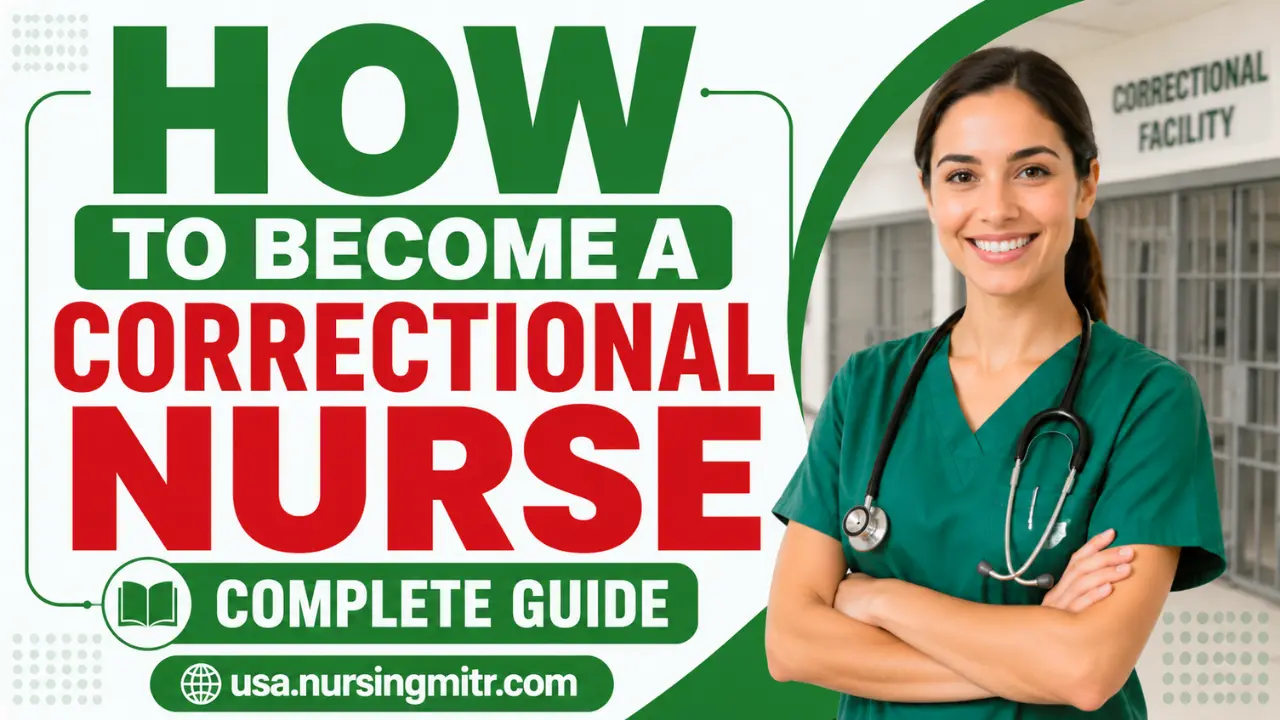
A Correctional Facility Nurse is a licensed registered nurse (RN) or advanced practice registered nurse (APRN) who delivers comprehensive medical, psychological, and preventive care to individuals incarcerated in jails, prisons, and juvenile detention centers. To say this role is unique in the nursing profession is a profound understatement.
When a patient walks into a traditional emergency room, the nurse’s primary focus is clinical. When an inmate is escorted into a correctional infirmary, the nurse must simultaneously execute a clinical assessment while maintaining hyper-vigilance regarding security—tracking the location of sharps, noting the inmate’s gang affiliations, ensuring they do not position themselves between the nurse and the exit, and communicating effectively with correctional officers who do not share a medical mindset.
In the United States, the constitutional right to healthcare for incarcerated individuals was established by the Supreme Court in the 1976 landmark case Estelle v. Gamble, which ruled that deliberate indifference to serious medical needs of prisoners constitutes cruel and unusual punishment under the Eighth Amendment. This ruling effectively made correctional nurses the legal gatekeepers of health for a highly vulnerable, marginalized population. With over 2 million people incarcerated in the U.S., and an aging prison population presenting with complex comorbidities, the demand for skilled correctional nurses has never been higher.
This guide serves as a complete, exhaustive curriculum for understanding, entering, and mastering the specialty of correctional nursing.
The Legal and Ethical Framework
Pedagogical Reasoning: Before teaching the “how-to” of the job, we must teach the “why.” Understanding the legal liabilities and ethical dichotomies of the prison environment prevents malpractice and protects the nurse’s license. This section creates the mental scaffolding required for safe practice.
The Principle of Equivalence of Care
The National Commission on Correctional Health Care (NCCHC) operates on the principle of “equivalence of care.” This means that an inmate should receive the same standard of care that they would receive in the outside community. If an inmate develops chest pain, the correctional nurse must initiate the same cardiac workup—ECGs, troponin levels, ASA administration—as an ER nurse in a private hospital. The environment may be locked, but the standard of care is not lowered.
Security vs. Healthcare: The Ethical Tightrope
The most profound ethical challenge in corrections is the conflict between security and healthcare.
- Example: A nurse needs to administer an injectable antipsychotic medication to a violently psychotic inmate. Security demands the inmate be placed in five-point restraints. The nurse must ensure that the restraints do not cause neurovascular compromise, that the inmate is monitored for aspiration during the injection, and that the restraints are released as soon as medically safe—even if the correctional officers prefer to leave them on for convenience.
- Confidentiality: HIPAA applies behind bars, but it is modified. Inmates have a right to medical privacy, but security staff may need to know certain medical information (e.g., an inmate has a communicable disease like active Tuberculosis, or an inmate is on a medication that causes sudden sedation, which is a security risk). The correctional nurse must expertly navigate what is shared, with whom, and why, always advocating for the minimum necessary disclosure.
| How to Pass the NCLEX-RN on Your First Attempt | Generic Drug Name Stems Cheat Sheet |
| Best Pharmacology Nursing Mnemonics & Tips Notes | How to Become an ER Nurse (Emergency Room Nurse) |
The Blueprint – How to Become a Correctional Facility Nurse
Pedagogical Reasoning: This section breaks down the career pathway. Rather than just listing steps, I will explain the strategic rationale behind each requirement. For instance, why is emergency room experience so highly valued in prisons? (Because there is rarely a doctor on site, requiring nurses to act with extreme autonomy).
Step 1: Earn Your RN License
The foundational requirement is graduating from an accredited nursing program (ADN or BSN) and passing the NCLEX-RN.
- Strategic Insight: While an ADN is the minimum, a BSN is heavily preferred, especially for federal positions (Federal Bureau of Prisons) or leadership roles. Furthermore, public health coursework included in BSN programs is highly applicable to the epidemiological challenges of prisons.
Step 2: Gain Clinical Experience
While some large jail systems hire new graduates, transitioning into corrections with 1 to 3 years of acute care experience is highly advantageous. The most valuable backgrounds include:
- Emergency Department (ED): Teaches rapid triage, trauma assessment, and working with hostile or undifferentiated patients.
- Psychiatric/Mental Health: Prisons are the largest mental health providers in the U.S. Experience with de-escalation, suicide precautions, and psychotropic medications is invaluable.
- Med-Surg/ICU: Provides the foundation for managing the severe chronic diseases (diabetes, COPD, hypertension) prevalent in the aging prison population.
Step 3: Consider a Graduate Nursing Program (The Advanced Trajectory)
To become a primary care provider in a correctional facility, an RN must complete an MSN or DNP program. The two most common tracks are:
- Family Nurse Practitioner (FNP): Manages chronic disease, acute sick call, and physicals.
- Psychiatric-Mental Health Nurse Practitioner (PMHNP): Highly sought after to manage the massive psychiatric caseloads, prescribe complex psychotropic regimens, and manage inmates in solitary confinement.
Step 4: Obtain Specialty Certification
The gold standard for correctional nursing validation is the CCHP-RN (Certified Correctional Health Professional – Registered Nurse), administered by the NCCHC. It requires passing an exam focused on the legal, ethical, and clinical nuances of the correctional environment. For NPs, board certification (FNP-BC or PMHNP-BC) is required, often supplemented by the CCHP.
Step 5: Licensure and Continuing Education
Maintaining an active state RN license is mandatory. In corrections, CE should be strategically targeted toward forensic evidence collection, infectious disease updates (Hepatitis C, HIV, TB), pharmacology of addiction (MAT – Medication-Assisted Treatment), and legal standards.
Financial Anatomy – Costs and Compensation
Pedagogical Reasoning: Students must approach their career with financial literacy. This section provides a realistic cost-benefit analysis, highlighting the unique financial architecture of government employment (pensions, GS pay scales) which differs vastly from private hospital compensation.
The Investment: Cost to Become a Correctional RN
The financial pathway mirrors standard nursing, with the addition of niche certifications:
- Education: $6,000 (ADN) to $100,000+ (Private BSN).
- Licensure: ~$300 – $500.
- CCHP-RN Certification: ~$330 (Exam fee).
- Mitigation Strategies: Because many correctional facilities are state or federally funded, they often qualify for Public Service Loan Forgiveness (PSLF). After 10 years of government employment, a nurse can have their federal student loans completely forgiven—a massive financial perk that private hospital nurses rarely get.
The Return: Salary and Job Outlook
According to the BLS (May 2024), the median RN salary is $93,600. However, correctional nurses often earn more than their hospital counterparts because they are typically government employees.
| State | Median Annual RN Salary (BLS) | Correctional Nuance |
|---|---|---|
| California | $140,330 | State prison nurses are heavily unionized (e.g., CNA), driving wages extremely high. |
| New York | $105,600 | High cost of living offset by robust state benefits and pensions. |
| Texas | $90,010 | Large state prison system with consistent hiring; lower cost of living. |
| Florida | $82,850 | Mix of county jails and state prisons; rapid growth in elderly inmate care. |
| Mississippi | $74,470 | Lower wage, but exceptionally low cost of living; high job security. |
The Federal Advantage (BOP): Nurses working for the Federal Bureau of Prisons (BOP) are paid on the General Schedule (GS) pay scale. An entry-level RN might start at a GS-9 ($55,000-$71,000), but with locality pay and advancement to GS-11 or GS-12, they can easily exceed $110,000. Furthermore, federal benefits include the Federal Employees Retirement System (FERS), which provides a pension, a 401k-style Thrift Savings Plan with a 5% government match, and premium health insurance.
Job Outlook: The BLS projects 6% growth (197,000 new RN jobs) from 2023-2033. Correctional nursing is virtually recession-proof. Crime rates, sentencing laws, and an aging prison population ensure a steady, unending demand for healthcare staff behind bars.
A Day in the Life – Roles and Responsibilities
Pedagogical Reasoning: Abstract concepts must be grounded in operational reality. By detailing the exact procedures of the “Med Line” and “Sick Call,” and providing comprehensive case studies, the learner can visualize the operational flow of a prison clinic.
1. Intake Screening (The Frontline Defense)
When an individual is arrested and brought to a county jail, the correctional nurse performs an intake health assessment. This is a high-stakes, rapid triage.
- What they look for: Signs of alcohol or benzodiazepine withdrawal (which can be fatal if not treated), active suicidal ideation, infectious diseases (lice, scabies, TB symptoms), and acute injuries from the arrest.
- Case Study: An inmate is brought in at 2:00 AM, highly agitated, sweating profusely, and trembling. A novice might assume the inmate is just angry. The correctional nurse, recognizing the clinical signs of delirium tremens (DTs), immediately initiates a CIWA (Clinical Institute Withdrawal Assessment) protocol, secures the inmate in a safe medical observation cell, and contacts the on-call provider for a Valium taper. This rapid assessment prevents a fatal seizure.
2. Daily Sick Call & Triage
Inmates submit “kites” (written requests) to see a nurse. The nurse runs sick call, assessing 20 to 40 inmates a day.
- The Challenge: Inmates often use sick call for secondary gain (e.g., requesting ibuprofen to trade as currency, or seeking a “lay-in” to get out of their cell or work duty). The correctional nurse must possess masterful assessment skills to differentiate between malingering and genuine pathology, all while maintaining a non-judgmental demeanor.
3. Medication Administration (The Med Line)
Medication distribution in a prison is a highly choreographed, security-heavy process.
- The Mechanics: Inmates line up at a “med window” (a secure glass barrier). The nurse verifies the inmate’s identity, pours the medication, and insists the inmate open their mouth to prove they swallowed it (“watch and verify”).
- Crush and Float: For certain high-abuse-potential medications (like psychotropics or pain meds), nurses must crush the pill and dissolve it in water in front of the inmate to prevent “cheeking” (hiding the pill in the cheek to sell or hoard later).
- Security: Sharps (needles) used for insulin or TB tests are counted before and after every single med pass—down to the milliliter of medication in a vial. A missing syringe is a facility-wide lockdown event.
4. Emergency Response
When a “man down” call goes out, the nurse grabs an emergency bag and responds to the tier or the yard.
- The Reality: The nurse arrives to find a circle of inmates and correctional officers. The officer secures the scene (handcuffing the patient if necessary for safety) before the nurse approaches. The nurse must provide life-saving care (CPR, naloxone for overdose, wound packing for stab wounds) while kneeling next to a handcuffed patient on a concrete floor, surrounded by a chaotic audience.
5. Chronic Care Management
Prisons are essentially geriatric wards. Inmates serve long sentences, age rapidly due to stress and poor prior healthcare, and develop complex diseases. Nurses run chronic care clinics for diabetes, hypertension, HIV, and Hepatitis C. They coordinate outside hospital transfers for dialysis or oncology treatments, requiring the nurse to act as a liaison between the prison warden, the transporting officers, and the community hospital.
Scope of Practice and Extreme Autonomy
Pedagogical Reasoning: This is a critical differentiator for correctional nursing. Students must understand that “scope of practice” in a prison is often pushed to its legal limits due to geographical isolation from physicians.
In a hospital, a doctor is usually down the hall. In a prison, the physician or Nurse Practitioner might be 50 miles away, or only available via telehealth from 8:00 AM to 4:00 PM.
Because of this, correctional RNs operate under extensive Standing Orders (also called Standardized Procedures or Protocols). For example, an RN might have a standing order that states: “If an inmate presents with a blood glucose below 60, administer 15g of oral glucose. If unconscious, administer 1mg Glucagon IM. If no response in 15 minutes, activate 911.”
The correctional nurse initiates this care independently, stabilizes the patient, and then contacts the provider. This requires immense confidence, deep clinical knowledge, and the ability to document the justification for every action taken under these standing orders. If an RN exceeds their scope, they are personally legally liable, as the correctional facility will not cover actions outside the state Nurse Practice Act.
Subspecialties Behind the Walls
Pedagogical Reasoning: Career progression is vital for retention. Showcasing subspecialties demonstrates that a nurse can spend an entire 30-year career within the correctional system without ever getting bored.
1. Correctional Mental Health Nurse / PMHNP
Prisons have become the de facto mental health institutions of America. Up to 40% of inmates have a diagnosed mental illness. These nurses manage acute psychosis, suicide watch protocols, and the complex ethical dilemma of treating inmates in solitary confinement (which is known to exacerbate mental illness).
2. Infectious Disease / Public Health Nurse
Prisons are incubators for disease. The ID nurse tracks outbreaks of Tuberculosis, manages massive Hepatitis C treatment programs (using newer, highly curative antivirals), coordinates HIV care, and implements harm reduction strategies (like distributing condoms or offering MAT for opioid use disorder). They work closely with the local county health department.
3. Juvenile Corrections Nurse
Working in youth detention centers (ages 12-17). This requires pediatric knowledge, an understanding of adolescent development, and a high trauma-informed care lens, as this population overwhelmingly suffers from adverse childhood experiences (ACEs).
4. Correctional Nursing Administrator (DON)
The Director of Nursing in a prison oversees a massive operation. They manage a multi-million-dollar medical budget, navigate the politics between the healthcare contractor and the state Department of Corrections, ensure NCCHC accreditation standards are met, and advocate for nursing staff safety.
The Professional Ecosystem
Pedagogical Reasoning: Correctional nursing can be professionally isolating. Nurses must know where to turn for evidence-based guidelines and legal protection.
- NCCHC (National Commission on Correctional Health Care): The absolute pinnacle organization. They publish the Standards for Health Services, which are the legal benchmarks used in lawsuits against prisons. Their certification (CCHP-RN) is the industry standard.
- ACHSA (American Correctional Health Services Association): Provides networking and a community of peers who understand the unique frustrations of the job.
- ANA (American Nurses Association): Published the Correctional Nursing: Scope and Standards of Practice (3rd Edition), which is the definitive document protecting the RN’s license in court.
The Psychological Armor – Skills & Qualities for Success
Pedagogical Reasoning: This section completes the psychological profile of a successful correctional nurse. It goes beyond standard nursing skills (like compassion) and addresses the specific defense mechanisms required to survive and thrive in a prison.
1. Clinical Judgment and Critical Thinking
Because resources are limited and providers are distant, the correctional nurse must be a master diagnostician at the nursing level. You must differentiate between a panic attack and a pulmonary embolism using only a stethoscope, a pulse oximeter, and your clinical intuition.
2. Unwavering Professional Boundaries (The “Hook”)
Inmates are master manipulators. This is not a character flaw; it is a survival skill they developed in prison. They will attempt to “hook” nurses through flattery, sob stories, or offers of protection. Conversely, they might try to manipulate by creating false grievances. A successful correctional nurse learns to be polite, compassionate, and thorough, but utterly rigid in their boundaries. You are not their friend, their pen pal, or their advocate to the parole board. You are their nurse.
3. Emotional Resilience and Managing Moral Injury
You will care for inmates who have committed heinous crimes—murder, child abuse, assault. You will also care for victims of human trafficking or people incarcerated for minor drug offenses who are serving draconian sentences. You must provide equivalent care to a child molester with the same empathy and clinical excellence you would provide to a grandmother. This causes “moral distress” if not processed correctly. Successful nurses develop a cognitive compartmentalization, separating the crime from the human being requiring medical care.
4. Situational Awareness and Security Mindset
A hospital nurse walks into a patient room focusing solely on the IV pump. A correctional nurse walks into a cellblock noting which inmates are present, where the weapons might be, the tone of voice of the inmates, and the nearest panic button. You must integrate safety checks into your clinical workflow naturally.
The Double-Edged Sword – Pros & Cons of a Correctional Nurse Career
Pedagogical Reasoning: This section seamlessly completes the truncated text provided by the user. An ethical educator must present a balanced, unvarnished view of the profession to prevent early career burnout.
As a correctional nurse, you are often the first healthcare provider to treat them with dignity in years, or perhaps ever. You have the opportunity to cure their Hepatitis C, stabilize their diabetes, or connect them with mental health resources, fundamentally changing their trajectory upon release. The public health impact is massive—when you cure an inmate’s TB, you protect the community they will eventually re-enter.
Schedule Predictability and Work-Life Balance: Unlike hospital nursing, which often mandates forced overtime, requires holiday work, and features rotating shifts, many correctional facilities operate on fixed schedules (e.g., Monday-Friday, 7:00 AM to 3:30 PM). There are no holidays in a prison—medical staff are usually off on federal/state holidays, a rarity in the nursing profession. This predictability is highly prized by nurses with families.
The Cons (The Costs)
The Threat of Workplace Violence: This is the most significant danger. While violent assaults on nurses are not an everyday occurrence in every facility, the threat is omnipresent. Nurses are exposed to “throw-aways” (feces, urine, blood thrown by inmates), improvised weapons, and the risk of being caught in the middle of a prison riot or inmate fight. Even verbal abuse and constant intimidation take a severe psychological toll over time.
Moral Distress and Ethical Compromise: You will face situations where your clinical judgment conflicts with security protocols. For example, security might deny an emergency transfer to the hospital because they do not have enough officers to escort the inmate, forcing you to manage a critical patient in the clinic longer than is clinically safe. You may witness solitary confinement practices that you know are causing psychological torture to a mentally ill patient, but you lack the authority to stop it. This loss of autonomy over patient advocacy leads to profound moral injury.
Resource Limitations and Substandard Environments: Many correctional medical units are outdated, underfunded, and lack the high-tech equipment found in hospitals. You may have to manage complex patients with minimal laboratory turnaround times or wait weeks for an outside specialist appointment due to transportation logistics. Practicing “equivalence of care” with substandard tools is deeply frustrating.
Administrative Burden and Legal Liabilities: Documentation in corrections is defensive. Because inmates have guaranteed access to the courts (often filing pro se lawsuits alleging inadequate healthcare), your charting must be impeccable. Every refusal of care, every missed med line due to a facility lockdown, and every clinical decision must be meticulously documented to protect your license from litigation.
Isolation from the Medical Community: Working behind barbed wire can be professionally isolating. You do not have the immediate support of a rapid response team, a pharmacy down the hall, or a cohort of medical peers to collaborate with in real-time. This isolation can make a new nurse feel unsupported during high-acuity events.
Conclusion: The Calling of the Correctional Nurse
Choosing to become a Correctional Facility Nurse is choosing to practice at the absolute edges of the nursing profession. It requires a unique breed of clinician—one who possesses the clinical acuity of an ER nurse, the psychiatric fortitude of a mental health nurse, the boundaries of a lawyer, and the situational awareness of a law enforcement officer.
The pathway is straightforward: secure your RN license, gain acute care or psych experience, and transition into a system that will test your skills daily. Financially, it offers unparalleled stability, government pensions, and freedom from the grueling shift-work that plagues hospital nursing.
However, the true reward is not financial. It is deeply moral. The incarcerated population is arguably the most despised, forgotten, and medically neglected demographic in America. When you walk into a prison infirmary, you are the physical manifestation of the Eighth Amendment. You are the proof that society does not completely abandon those who have broken its laws.
If you can look past the razor wire, maintain your ethical center amidst manipulation, and find humanity in the most inhumane of environments, correctional nursing will not just make you a better nurse—it will make you a profoundly resilient and principled human being. The walls are high, but the impact is higher.
References & Recommended Reading
- National Commission on Correctional Health Care (NCCHC). (2024). Standards for Health Services in Jails and Prisons.
- Estelle v. Gamble, 429 U.S. 97 (1976). Supreme Court of the United States.
- American Nurses Association (ANA). (2020). Correctional Nursing: Scope and Standards of Practice (3rd Ed.).
- U.S. Bureau of Labor Statistics. (2024). Occupational Outlook Handbook: Registered Nurses.
- Maroney, C., & Maroney, J. (2022). Correctional Nursing: Current Practice and Future Directions. Journal of Forensic Nursing.
- Center for Disease Control and Prevention (CDC). (2023). Health Disparities and Incarceration.
FAQs
What is a correctional nurse?
A correctional nurse provides healthcare to people in prisons, jails, and other correctional facilities.
How do you become a correctional nurse?
Earn a nursing degree, pass the NCLEX-RN, get your RN license, and apply for correctional nursing jobs.
How long does it take to become a correctional nurse?
Most nurses qualify in 2–4 years, depending on their nursing education path.
What does a correctional nurse do?
They assess patients, administer medications, treat illnesses, and respond to medical emergencies in correctional facilities.
How much does a correctional nurse make?
Salary depends on experience, location, employer, and certifications.
Is correctional nursing a good career?
Yes. It offers competitive pay, job stability, and opportunities to work in a unique healthcare setting.